
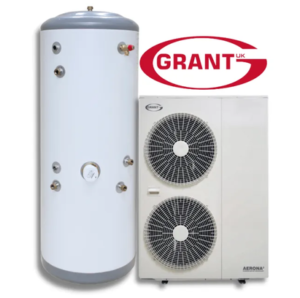
What Is the Boiler Upgrade Scheme and How Much Can You Get?
Table of Contents
The Boiler Upgrade Scheme (BUS) is a UK government initiative administered by Ofgem that provides upfront capital grants to replace fossil-fuel heating systems in existing domestic properties across England and Wales. Launched on 23 May 2022, the scheme contributes up to £7,500 toward an air source heat pump installation, ground-source heat pump, or water-source system, alongside £5,000 for eligible biomass boilers. The grant is deducted directly from your installer’s quote to lower upfront transition costs.
- Air-source heat pump (ASHP): £7,500 non-repayable grant discount toward equipment and installation.
- Ground-source heat pump (GSHP): £7,500 non-repayable grant discount toward ground-loop or borehole systems.
- Water-source heat pump (WSHP): £7,500 non-repayable grant discount for eligible open- or closed-loop surface-water arrays.
- Biomass boiler: £5,000 non-repayable grant discount for eligible off-gas grid rural installations.
Which Heat Pump Types Qualify for the £7,500 Grant?
Air-Source Heat Pumps (ASHPs)
Air-source heat pumps represent the vast majority of Boiler Upgrade Scheme claims because the £7,500 grant covers between 60% and 100% of standard domestic installation costs.
- Thermal capacity cap: The installed system must have a maximum capacity of ≤ 45 kWth, covering almost all detached and semi-detached domestic homes.
- Efficiency threshold: Must achieve a minimum Seasonal Coefficient of Performance (SCOP) of ≥ 2.8 at a 35 °C design flow temperature.
- MCS installation standards: All design work, room-by-room heat loss calculations (BS EN 12831), and commissioning must comply with MCS MIS 3005 and be delivered by an MCS-certified heat pump installer.
- Cost breakdown example: A £10,500 install minus £7,500 grant = £3,000 homeowner contribution (typical gross domestic range: £7,000–£13,000, leaving £0–£5,500 out of pocket).
Ground-Source Heat Pumps (GSHPs)
The £7,500 GSHP grant covers roughly 20–35% of a typical ground-source installation.
- Land and borehole requirements: Horizontal slinky arrays require approximately 600–1,000 m² of clear land. For properties with constrained garden footprints, vertical closed loops require boreholes drilled to depths between 60–200 m, adding substantial costs for specialised groundworks and drilling.
- Extended voucher validity: To accommodate the extended scheduling required for excavation and ground-loop installation, Ofgem issues a 6-month voucher validity window for GSHPs, compared to the standard 3-month window for air-source units.
- Cost breakdown example: With typical turnkey domestic installations running between £20,000 and £40,000, the £7,500 BUS voucher leaves a remaining homeowner contribution of £12,500 to £32,500.
- Design compliance: Ground arrays must be accurately sized to local ground conductivity via an MCS-compliant ground source heat pump survey and design before the voucher application can be lodged.
Water-Source Heat Pumps (WSHPs)
Water-source heat pumps represent the least common Boiler Upgrade Scheme claim due to the strict geographical requirement of having an adequate, adjacent water source such as a lake, river, or suitable aquifer.
- Licensing and abstraction thresholds: Closed-loop submerged arrays avoid direct extraction, but open-loop systems abstracting more than 20 m³/day require a formal Environment Agency abstraction licence, established during a water source heat pump feasibility assessment.
- Installed cost vs. grant value: Total installation costs typically run between £15,000 and £35,000 depending on civil engineering and water-array complexity, leaving a post-grant out-of-pocket cost of £7,500 to £27,500 after the £7,500 BUS voucher.
- Extended voucher validity: Ofgem grants a 6-month voucher validity window for WSHP projects to accommodate extended environmental permitting, pipework submersion, and commissioning.
Biomass Boilers – The £5,000 Grant and Its Restrictions
Biomass boilers receive a lower £5,000 BUS grant and face regulatory hurdles heat pumps do not.
- Location and grid restrictions: Funding is strictly restricted to rural properties located off the mains gas grid; urban homes and properties with an active mains gas connection are ineligible.
- Smoke control and emissions standards: If sited within a designated smoke control area, the appliance must be verified on the official DEFRA-exempt list to satisfy statutory particulate matter and emissions standards.
- Fuel storage and planning compliance: Bulk pellet hoppers, silos, and fuel-delivery access routes must comply with local building regulations, separation distances, and relevant local planning constraints.
- Cost breakdown example: With gross installation costs running between £10,000 and £21,000, the £5,000 BUS grant leaves an out-of-pocket homeowner contribution of £5,000 to £16,000, with long-term fuel costs managed through professional biomass boiler installation and servicing.
Eligibility Rules – What Disqualifies a Property?
- Existing residential status: The property must be an existing domestic dwelling, disqualifying commercial premises and standard new-build developments under construction.
- Self-build restrictions: Self-build properties must have been built primarily by the first owner without corporate ownership, causing standard developer-built properties to fail eligibility.
- EPC validity and insulation standards: The property must possess a valid Energy Performance Certificate issued within the last 10 years without outstanding insulation recommendations. If your EPC recommends cavity-wall or loft insulation, you are ineligible until that work is completed and a new EPC issued following an EPC assessment and insulation upgrades.
- Existing heating system replacement: The heat pump must replace an existing fossil-fuel heating system (gas, oil, LPG) or direct electric heating, which prevents funding for supplemental units or replacing an existing heat pump.
- Geographic jurisdiction: The installation must be located in England or Wales, disqualifying properties in Scotland and Northern Ireland where separate regional schemes operate.
- Prior funding restrictions: The property cannot have received prior government funding for low-carbon heat, rendering properties with active Renewable Heat Incentive (RHI) accreditations or Green Homes Grants ineligible.
- Social housing exclusion: The dwelling must be privately owned or within the private rented sector, excluding local authority and housing association properties from voucher approval.
How to Apply – Step-by-Step (Installer-Led Process)
- Check your Energy Performance Certificate (EPC) on the public register to confirm it is valid and free of outstanding cavity-wall or loft insulation recommendations.
- Contact local MCS-certified contractors and request a free heat pump quote alongside room-by-room heat loss calculations to compare hardware specifications and pricing.
Do not pay a deposit until the voucher is confirmed.
- Select your preferred registered installer, agree on the final system design, and provide formal written consent for them to act on your behalf.
- Submit the formal grant application via your installer to Ofgem E-Serve, who verifies property eligibility before the voucher is issued.
- Complete the heating system installation, commissioning, and handover to receive your MCS certificate and compliance documentation within the voucher validity period.
- Redeem the completed claim; the grant is paid to the installer, not the homeowner, leaving you to pay only the discounted balance.

What the Grant Actually Covers – Real Post-Discount Costs
| Technology | Typical Cost Range | BUS Grant | Estimated Out-of-Pocket |
|---|---|---|---|
| Air-Source Heat Pump (ASHP) | £7,000–£13,000 | £7,500 | £0–£5,500 |
| Ground-Source Heat Pump (GSHP) | £20,000–£40,000 | £7,500 | £12,500–£32,500 |
| Water-Source Heat Pump (WSHP) | £15,000–£35,000 | £7,500 | £7,500–£27,500 |
| Biomass Boiler | £10,000–£21,000 | £5,000 | £5,000–£16,000 |
Some contractors artificially inflate their baseline equipment and labour figures to absorb the government subsidy rather than passing the full reduction directly to the homeowner. Always demand an itemised quote separating hardware, cylinder upgrades, and labour costs, then model your expected energy consumption using our heat pump running cost calculator.
Can You Combine the BUS With Other Funding?
The Boiler Upgrade Scheme cannot be combined with the Green Homes Grant or the Renewable Heat Incentive – both are closed.
- ECO4 (Energy Company Obligation): Provides fully funded energy efficiency improvements including heating upgrades and insulation, triggered by qualifying means-tested benefits or low household income under £31,000.
- Home Upgrade Grant (HUG2): Delivers direct capital funding for energy-efficiency retrofits, triggered by off-gas grid properties with an EPC rating between D and G and an eligible household income.
- Nest (Wales): Offers means-tested grants and low-interest loans for clean heat installations, triggered by Welsh residents living in fuel poverty with poorly rated properties.
Local councils also run targeted municipal retrofit schemes and LA Flex delivery routes that allow homeowners to fund fabric insulation alongside a BUS voucher; check our breakdown of ECO4 and Home Upgrade Grant support to confirm your property’s qualification criteria.
Common Reasons BUS Applications Get Rejected
- Expired or missing EPC – Commission a certified domestic energy assessor to book an EPC re-assessment and lodge an updated certificate on the central register.
- Outstanding insulation recommendations – Install the recommended cavity-wall or loft insulation, then obtain a replacement EPC confirming all fabric requirements have been resolved.
- Unaccredited installer – Appoint a contractor certified to MCS MIS 3005 standards who handles the Ofgem application and completes compliant system design calculations.
- New-build dwelling status – Standard new builds are excluded; only existing occupied homes or self-build properties occupied for over 12 months qualify for funding.
- System capacity exceeding 45 kWth – Re-evaluate building heat loss calculations to down size equipment or install modular, independently zoned systems below the 45 kWth threshold.
When Does the Boiler Upgrade Scheme End?
The Boiler Upgrade Scheme is officially confirmed to run until 31 March 2028. Grant capital is backed by the Department for Energy Security and Net Zero (DESNZ) under the current multi-year clean heat settlement. No further statutory extension has been announced beyond this date, meaning all voucher redemptions remain tied to the active scheme timeline. Homeowners should allow 8 to 12 weeks for detailed room-by-room surveys, equipment ordering, and installation to complete work comfortably within Ofgem’s 3-month voucher window for air-source heat pumps or 6-month window for ground- and water-source systems. Check current scheme availability to confirm funding status for your property.
Frequently Asked Questions
How much is the Boiler Upgrade Scheme grant for an air source heat pump in 2025?
The Boiler Upgrade Scheme pays a £7,500 grant toward the installation of an air source heat pump in existing domestic properties in England and Wales. The grant is paid directly to your MCS-certified installer, who deducts it from your quoted price. For a typical £10,500 ASHP installation, the homeowner’s out-of-pocket cost would be approximately £3,000.
Does my EPC disqualify me from the Boiler Upgrade Scheme?
Your property needs a valid Energy Performance Certificate no older than 10 years. If the EPC contains outstanding recommendations for cavity wall or loft insulation, you are ineligible until that insulation is installed and a new EPC is issued. This is the most common reason BUS applications are delayed for 1930s-to-1970s UK housing stock.
Is a ground source heat pump eligible for the £7,500 Boiler Upgrade Scheme grant?
Yes. Ground source and water source heat pumps both qualify for the full £7,500 BUS grant, provided the system is 45 kWth or below and installed by an MCS-certified contractor. Because groundworks extend timelines, the Ofgem voucher validity period is 6 months for GSHP and WSHP installations, compared with 3 months for air source heat pumps.
Can I combine the Boiler Upgrade Scheme with ECO4 or the Welsh Nest scheme?
The BUS cannot be stacked with the closed Green Homes Grant or Renewable Heat Incentive. However, it can run alongside ECO4 local-authority delivery, the Home Upgrade Grant for off-gas properties, and in Wales the Nest interest-free loan of up to £25,000, which can cover the residual cost after the BUS grant is applied.”
