
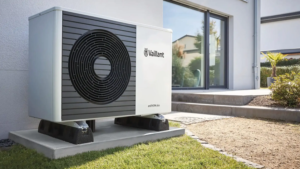
What Is the Downside to a Heat Pump?
What Is the Downside to a Heat Pump? The Short Answer
Table of Contents
A heat pump presents operational downsides, including high capital expenditure and reduced winter efficiency, which we document across our full heat pump review archive.
- High installation costs: £7,000–£12,000 for an ASHP versus £2,000–£3,500 for gas.
- Marginal running cost savings: £840 annually versus £809 for gas boilers.
- Cold-weather efficiency: SCOP drops to 2.0–2.8 at −7°C, engaging backup heaters.
- Required emitter upgrades: 45°C flow demands 1.5×–2.5× larger radiator surface areas.
- Acoustic disturbance: external units generate 45–65 dB(A); low-frequency hum penetrates masonry.
- Siting constraints: Permitted Development requires at least one metre from boundaries.
Upfront Cost: The Real Numbers Behind Installation
Our data shows that full supply and installation of an air-source heat pump (ASHP) for an average UK three-bedroom semi-detached dwelling typically costs between £7,000 and £12,000 before applying any government subsidies.
| Heating System / Grant Item | Installed Cost Range | Net Out-of-Pocket Cost | Scope & Inclusions |
|---|---|---|---|
| ASHP installed cost | £7,000–£12,000 | £0–£4,500 | Supply and fit for typical UK 3-bed semi-detached home |
| GSHP installed cost | £18,000–£35,000 | £10,500–£27,500 | Supply and fit including external ground loop infrastructure |
| Gas boiler replacement cost | £2,000–£3,500 | £2,000–£3,500 | Direct like-for-like combi or system boiler swap |
| BUS grant deduction | £7,500 | -£7,500 upfront voucher | Upfront discount detailed in our Boiler Upgrade Scheme explainer |
Beyond the primary equipment, we found that emitter upgrades add £250–£600 per panel plus £100–£200 in labour, an unavoidable expense when replacing standard radiators with the 1.5×–2.5× surface area required to emit sufficient heat at lower 45°C design flow temperatures. Furthermore, properties switching from an existing combination boiler must account for the substantial cost and floor space required to site a dedicated unvented indirect hot water cylinder. Finally, our data shows that domestic electrical infrastructure often demands major remedial work, including main fuse upgrades coordinated with the Distribution Network Operator, consumer unit replacements, and new dedicated circuits compliant with Part P regulations to safely accommodate heat pump compressors and back-up immersion heaters.
Efficiency Drop in Cold Weather: What the Data Actually Shows
A heat pump’s efficiency is not a fixed number, it is a curve, and in the UK that curve bends hardest between November and February.
| Outdoor Temperature | Typical SCOP (ASHP) | Typical SCOP (GSHP) | Backup Heater Risk |
|---|---|---|---|
| 7°C | 3.5–4.5 | 4.0–5.0 | Low |
| 2°C | 3.0–3.5 | 4.0–4.8 | Low-Moderate |
| −2°C | 2.5–3.2 | 3.8–4.5 | Moderate |
| −7°C | 2.0–2.8 | 3.5–4.2 | High |
Air-source units suffer thermodynamic degradation when ambient air approaches freezing. Moisture condenses on the outdoor evaporator coil and freezes solid, triggering automated reverse-cycle defrost routines every 30 to 90 minutes. During these 5- to 15-minute cycles, the four-way valve shifts, forcing the compressor to extract heat directly from the indoor heating circuit or buffer vessel to melt external ice. Net heat delivery ceases, operational efficiency plummets toward resistive parity, and auxiliary electric immersion heaters engage to prevent circulating flow temperatures from collapsing.
Prolonged sub-zero spells expose refrigeration circuits to acute mechanical stress, as tracked throughout our cold-climate heat pump performance tests. Field diagnostics reflect this operational strain. Daikin Altherma platforms regularly throw U0 codes indicating low suction pressure from refrigerant starvation, alongside U4 communication errors under extreme electrical draw. Similarly, Mitsubishi Ecodan systems log F1 and F9 fault sequences as inverter scroll compressors exceed high-pressure thresholds or trigger discharge temperature safety trips while attempting to lift low ambient thermal energy.
Running Costs: Heat Pump vs Gas Boiler in 2026+
The single most common question we receive is whether a heat pump is actually cheaper to run than a gas boiler, and the honest answer is: barely, and only if the system is properly sized.
Prior to 2022, lower electricity-to-gas price ratios allowed efficient units to deliver lower annual heating bills. Subsequent domestic market shifts narrowed and inverted that operating margin against standard mains gas appliances. We document these changing fuel economics across our heat pump running cost breakdown.
- ASHP at SCOP 3.5: 12,000 ÷ 3.5 × 24.5p = ~£840/yr
- Gas boiler at 92%: 12,000 ÷ 0.92 × 6.2p = ~£809/yr
This comparison assumes indicative Q1 2025 Ofgem price cap rates of 24.5p/kWh for electricity and 6.2p/kWh for gas. The thermal load models a typical UK three-bedroom semi-detached property within EPC band D demanding 12,000 kWh annually. Running elevated water flow temperatures degrades seasonal efficiency, pushing annual heat pump operating costs well above fossil alternatives. A well-designed high-SCOP installation paired with an on-site solar PV array can offset peak daytime tariffs and restore operational parity.
Noise, Siting, and the Neighbour Problem
Most manufacturer datasheets list external unit noise between 45 and 65 dB(A), which tells you almost nothing about whether your neighbour will complain.
- 30 dB: Ambient background in a quiet library
- 50 dB: Operational cycle of a domestic dishwasher
- 60 dB: Standard volume of normal conversation
Standard A-weighted decibel ratings intentionally downplay lower acoustic frequencies, yet persistent low-frequency compressor hum below 100 Hz easily penetrates brickwork and resonates directly through shared masonry party walls and suspended timber joists. Our acoustic field assessments show this continuous tonal vibration generates an intrusive low-end drone that proves disproportionately problematic across dense UK terraced and semi-detached housing stock during cold periods when outdoor fans and compressors run at peak capacity.
Equipment siting flexibility remains strictly bounded by English Permitted Development legislation under Class G of the GPDO, which legally mandates installing the unit at least one metre from any property boundary line, as outlined across our UK heat pump planning permission guide.
The Installer Quality Problem: Where MCS Falls Short
MCS certification tells you an installer is registered. It does not tell you they designed the system correctly. A competent design requires an exhaustive room-by-room heat-loss survey under BS EN 12831, accurate hot water cylinder sizing, and indexed pipework calculation. In our assessment, installers routinely cut corners on these engineering fundamentals, substituting arbitrary rules of thumb that leave newly commissioned systems operating at a miserable COP of 1.8–2.2 rather than their rated 3.5+ seasonal target.
Across the installations we have reviewed, chronic compressor short-cycling caused by undersized or omitted buffer vessels remains the single most common post-commissioning defect. Without adequate thermal fluid volume, inverter compressors cycle rapidly on and off during mild weather, increasing internal mechanical wear, shortening component lifespan, and driving parasitic electrical consumption through the roof.
Demand to inspect the full BS EN 12831 heat-loss survey documents and equipment schedules before signing any installation contract. Cross-reference their proposed pipe diameters, emitter surface areas, and buffer capacity against our installer vetting checklist to guarantee the final design actually delivers.
Refrigerant Regulation and Long-Term Servicing Risk
Here is a downside almost no other publication covers. The UK’s retained F-gas Regulation 517/2014 is aggressively phasing down domestic hydrofluorocarbon availability, meaning stringent quota cuts will inevitably push R32 refrigerant supply and scheduled maintenance costs significantly upward over the next decade. R290 propane is emerging as the wider industry’s primary replacement, evaluated throughout our R290 propane heat pump review hub, yet because propane is classified as an A3 flammable gas, outdoor units require revised installation clearances, dedicated ventilation, and mandatory stand-off distances from unsealed windows, doors, and surface drainage gullies. If you buy an R32 unit today, standard service calls, circuit leak repairs, or refrigerant top-ups in 8–10 years may carry a significant cost premium as dwindling legal production quotas make certified gas refills scarce and expensive.
Verdict: Who Should Think Twice Before Installing a Heat Pump?
We review heat pumps for a living, and we rate the technology highly, for the right property. The operational, spatial, and financial downsides outweigh the benefits across specific homeowner profiles evaluated in our heat pump suitability guide:
- Solid-wall stock: Poorly insulated pre-1930s properties lacking the substantial capital budget required for comprehensive fabric insulation retrofits.
- Constrained plots: Terraced houses with no side access or garden clearance to satisfy statutory one-metre boundary and acoustic separation rules.
- Grid-only tariffs: Households on restrictive electricity tariffs without on-site solar PV arrays to offset higher cold-weather operational costs.
- Short horizons: Property owners planning to sell within three to four years, making it impossible to recoup upfront installation capital.
None of these are reasons to avoid heat pumps forever. They are reasons to do the maths first.
Heat Pump Ownership FAQs
How much does a heat pump cost to install in the UK compared to a gas boiler?
An air-source heat pump installed in a typical UK 3-bed semi costs between £7,000 and £12,000, while a ground-source system ranges from £18,000 to £35,000. By comparison, a like-for-like gas boiler replacement costs £2,000 to £3,500. The £7,500 Boiler Upgrade Scheme grant offsets part of the heat pump cost, but homeowners should also budget for potential radiator upsizing at £250 to £600 per panel.
Do heat pumps lose efficiency in cold UK winters?
Yes. At 7°C outdoor temperature, a mid-range air-source heat pump delivers a SCOP of 3.5 to 4.5. At −2°C this drops to roughly 2.5 to 3.2, and at −7°C it can fall to 2.0 to 2.8, at which point the electric backup immersion heater may activate. Ground-source systems are less affected because ground temperatures below 1.5 metres remain stable at 8 to 12°C year-round.
Are heat pumps more expensive to run than gas boilers in 2025?
At current Ofgem price-cap rates of approximately 24.5p per kWh for electricity and 6.2p per kWh for gas, heating a 12,000 kWh annual demand property with an air-source heat pump at SCOP 3.5 costs around £840 per year. A 92%-efficient gas boiler costs roughly £809 for the same demand. The gap narrows further if the heat pump SCOP drops below 3.0 in sustained cold weather, or widens in the homeowner’s favour if solar PV offsets electricity imports.
